
Treat acceptance as unconfirmed until the voucher’s written terms identify your intended exam and the booking process accepts the code. If you’re comparing the Fortinet NSE 7 exam price Pearson VUE will charge with a voucher offer, start with those checks. I can’t confirm an individual code’s eligibility, expiration rules, or refund terms without its documentation. The questions below will help you assess an offer, resolve payment uncertainty, and decide when to complete your booking.
Can you rely on an NSE 7 label to confirm voucher acceptance?
I wouldn’t rely on the label alone. Ask for confirmation that the specific voucher applies to the exact examination you intend to schedule through Pearson VUE.
Make your question precise. Provide the appointment’s exam name and code, your intended testing country, and the proposed test date. Ask the issuer to confirm coverage against those details in writing. Include your intended delivery method if you’re choosing between an online appointment and a test center.
Keep the response with your purchase records. Before relying on a general description such as an NSE 7 voucher, request the actual eligibility terms and any restrictions attached to the offer.
Avoid paying simply to discover whether a code works. If you already hold the voucher, follow the payment instructions for your reservation and inspect the result before submitting the booking. If you’re considering buying one, resolve eligibility with the seller first.
A useful question is whether the issuer will refund your purchase if the code is rejected for the appointment you have described. Ask for that answer before purchase, alongside confirmation of the covered exam.
If the seller cannot connect the offer to your intended appointment, leave the transaction pending and request clearer documentation.
Which exam details should match before you buy?
Use the full exam name, code, and version in every eligibility request. Keep your study-resource label, intended examination, and voucher description together so you can compare them directly.
When your preparation includes ExamJungle’s Enterprise Firewall 7.2 practice, record the subject and version in your study notes. Independently confirm the examination you intend to book before purchasing a voucher.
If your notes also reference Enterprise Firewall 7.0 practice, resolve that version difference first. Treat a preparation-page title as a prompt for checking the intended exam, rather than evidence of current scheduling availability.
Build a short appointment record with:
- The complete exam title and code you intend to select.
- The version associated with your preparation.
- Your intended testing country and delivery method.
- Your preferred examination date.
- The voucher’s stated eligible examination or category.
Send that record to the issuer and ask for a specific response. If the voucher terms describe a category rather than an individual exam, request confirmation that your selected code falls within it.
I’d pause payment whenever the exam descriptions disagree. Resolve the mismatch before asking about discounts, because your purchase decision should begin with a clearly identified appointment.
Where should you buy or request a voucher?
Choose a seller only after you can establish its identity, the voucher’s origin, and the terms governing your purchase. I can’t confirm a current purchasing channel or approve an individual seller from an offer’s wording alone.
If you’re considering a purchase described as direct from Fortinet, through a partner, or within a training bundle, request documentation for that particular transaction. Ask who issues the code, who takes payment, and who handles a rejected voucher.
For a training package, request an itemized description. Have the provider state whether an examination voucher is included, which examination it covers, and when you should expect delivery. Clarify any attendance or course-completion conditions before paying.
For an employer-sponsored arrangement, ask the training coordinator to supply the eligibility terms with the code. Keep the purchase reference available if you later need assistance.
Evaluate an individual resale offer with the same questions. Request written confirmation of transfer eligibility and your remedy if the code cannot be used. Avoid assuming that possession of a code establishes the right to use it.
Before buying, identify the person or organization responsible for resolving a problem. Ask for a receipt, a support contact, and a written response covering your intended appointment. Leave the purchase pending if those details remain unclear.
Will a voucher reduce your own exam bill?
Calculate the complete amount you would personally spend under each option. Use the confirmed card-payment total and the voucher’s purchase price, then include any remaining payment shown for the reservation.
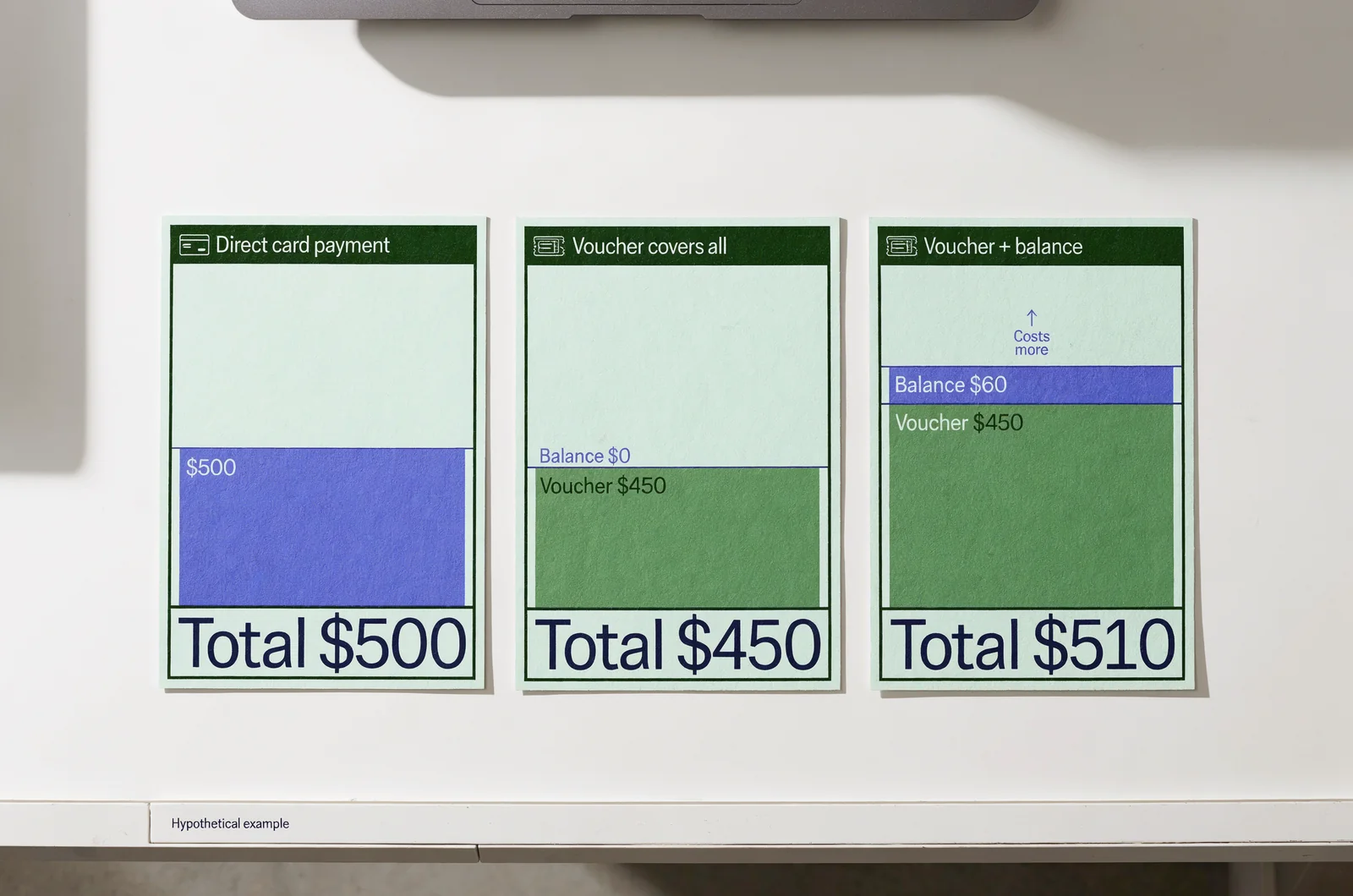
For planning, use this calculation:
Voucher route cost = voucher purchase price + remaining appointment payment + any separately disclosed charges.
Compare that result with the total for paying directly. Avoid assigning a savings figure until you have confirmed what the voucher covers.
Consider a hypothetical example, unrelated to Fortinet’s actual pricing. Suppose a direct booking totals $500. You can buy a voucher for $450, and it covers that entire booking. Under those assumptions, you would spend $50 less.
Now change one assumption: the same $450 voucher leaves $60 payable. Your combined spending would be $510, or $10 more than the hypothetical direct-payment total.
Use your own documented figures in that calculation. Record who pays for the voucher, too. If your employer supplies it, separate your personal payment from the organization’s expenditure rather than describing the examination as free.
Ask how taxes and any other disclosed charges will be handled. Include them according to the actual purchase and booking terms.
If the remaining balance is uncertain, keep the comparison provisional. Request a complete payable total before describing the offer as a saving.
How should you apply a voucher during booking?
Follow the instructions provided for your specific voucher and reservation. I wouldn’t rely on an assumed screen layout, button name, or redemption sequence.
Use this review sequence as a preparation aid:
- Confirm the examination, testing location or delivery method, and appointment date.
- Read the voucher’s redemption instructions.
- Enter the code in the designated field if the booking process provides one.
- Apply it as directed and inspect the displayed payment result.
- Review any remaining balance before authorizing payment.
- Save the final appointment and payment confirmation.
If the instructions describe a different redemption route, resolve that difference with the issuer before submitting payment. Ask where the code belongs and which confirmation establishes successful redemption.
Take particular care when a card-payment field appears alongside the voucher information. Inspect the stated charge and ask about any unexplained balance. Avoid submitting card details simply because the voucher’s effect is unclear.
Before confirming, compare the final reservation with the appointment record you prepared earlier. Check the examination, date, time zone, and delivery method.
Keep enough documentation to reconstruct the transaction: purchase receipt, voucher terms, redemption result, and appointment confirmation. Store the full code privately.
If anything remains ambiguous, stop before the final payment action and request clarification using the exact message shown on screen.
Does the expiration date mean book by or test by?
Ask the issuer to define the deadline explicitly. I wouldn’t interpret an expiration date as permission to schedule an examination beyond that date without written confirmation.
Request answers to these questions:
- Must the appointment be booked before the deadline?
- Must the examination itself take place before the deadline?
- Which time zone governs the cutoff?
- What happens if you reschedule beyond it?
- Can the issuer authorize an extension, and under what terms?
Keep the answers attached to the voucher record. Where the purchase description and detailed terms appear inconsistent, ask the issuer to reconcile them before you choose a date.
For example, suppose your voucher documentation names September 30 as the expiration date. Treat an October appointment as unresolved until the issuer confirms whether it qualifies. That date is illustrative; use the deadline stated for your own code.
Build your study schedule backward from the confirmed requirement. Leave room to review weak topics and handle an unexpected scheduling problem.
If the expiration date is close, compare the proposed purchase with your readiness and realistic availability. I’d avoid buying solely because the advertised discount is attractive.
Before paying, obtain a clear answer that connects the deadline to your intended examination date, including what would happen if that date changes.
Can you cancel, reschedule, or get your money back?
Request separate answers for the voucher purchase and the examination appointment. Don’t assume that a response about changing an appointment also answers whether you can recover the voucher’s purchase price.
Ask the seller about the purchase itself: whether refunds are permitted, the applicable deadline, and what documentation you must provide. Request the terms before purchase and retain the version associated with your transaction.
For the reservation, read the cancellation and rescheduling conditions shown for your appointment. Identify the deadline, the required action, and the stated consequence of missing it. Set a reminder earlier than the cutoff you confirm.
Then ask specifically about voucher treatment. If you cancel within the permitted window, what happens to the code? Can you reuse it, and would its original expiration date still apply? Who should resolve an unexpected result?
If you need to move an appointment, review the new date against the voucher’s eligibility terms before completing the change. Ask for clarification whenever the rescheduling instructions leave voucher validity unclear.
I can’t provide a verified universal refund window or cancellation deadline here. Use the terms attached to your purchase and reservation.
After any change, save the new confirmation and check both the appointment status and the payment record. Resolve discrepancies while your documentation is readily available.
Does one voucher include another attempt if you fail?
Budget for one attempt unless your written offer explicitly includes additional attempts. Treat retake coverage as a separate question that needs its own answer.
Ask the issuer how many examination attempts the purchase covers. If another attempt is included, request the eligibility conditions, redemption instructions, and any deadline for using it.
Keep the scope precise. Ask whether the additional attempt must involve the same examination code and version. Clarify what happens if the examination you originally selected is unavailable when you want to schedule again.
If a training package mentions retake support, ask the provider to describe the benefit exactly. Request confirmation of whether it includes examination payment, additional preparation, or another specified service.
Build two personal budget scenarios. In the first, record what you would spend on the initial appointment. In the second, add the amount you would need to fund another attempt if your purchase includes no further examination payment.
You don’t need to predict failure to make that plan. I’d set a comfortable spending limit before committing money, then decide whether the initial purchase fits it.
Avoid interpreting a discount, training bundle, or employer payment as evidence of retake coverage. Have the issuer identify the included attempts and their conditions in writing before you rely on them.
What should you do if Pearson VUE rejects the code?
Pause the transaction and record the exact error message. Ask for an explanation tied to your code and selected appointment before buying another voucher or submitting a different payment.
Use a short set of diagnostic questions:
- Does the entered code match the original delivery message?
- Is the selected examination covered by the written terms?
- Does the intended appointment meet the confirmed expiration requirement?
- Are country or delivery restrictions relevant?
- What status does the issuer report for the code?
Treat these as questions to investigate. Avoid guessing the cause from a general rejection message.
If your preparation record references NSE 7 LAN Edge, for example, include your intended examination’s complete title and code when requesting assistance. Explain any difference between your study label, voucher description, and reservation.
Provide your purchase reference and a redacted screenshot of the message. Follow the support channel’s instructions for sharing any sensitive voucher information.
If the issuer directs you to booking support, retain that response with the case record. Ask which organization owns the next action.
Before paying by card to secure an appointment, decide whether you’re comfortable proceeding while the voucher issue remains unresolved. Request a written resolution or a clear explanation of your remaining options.
What should your employer confirm when it pays?
Ask your employer to confirm the spending arrangement before you purchase or redeem anything. Establish who buys the voucher, who books the examination, and what evidence finance expects afterward.
If you’re expected to pay personally, request approval for the examination and the proposed payment route. Include the full exam name, intended date, voucher purchase amount, and any expected remaining balance.
Ask whether reimbursement includes each amount you expect to incur. Keep the response with your approval record rather than relying on an informal discussion about a certification budget.
If the employer supplies a code, request the associated terms and purchase reference. Confirm whom you should contact if redemption fails or the appointment needs to change.
For team bookings, maintain a private assignment record. Record which employee is expected to use each voucher, the intended examination, and the confirmed deadline. Ask the purchaser to resolve any uncertainty about reassignment before moving a code between colleagues.
Clarify responsibility for a second attempt as well. Request a separate answer rather than carrying the initial approval forward by assumption.
At the end of the process, submit the receipt and appointment evidence your employer requested. Keep your own copies of the authorization, relevant terms, and final payment confirmation until the reimbursement or reconciliation is complete.
How should exam readiness affect when you use the voucher?
Choose a booking date that fits both your preparation plan and the voucher’s confirmed conditions. I’d assess readiness before letting a discount or deadline determine the examination date.
Start with the exact examination you intend to take. Compare your study plan with its current official objectives, and identify topics you still need to explain or practice.
If you use OT Security 7.2 practice on ExamJungle, keep that subject and version visible in your preparation record. Confirm that your intended booking matches the material you have chosen to study.
Apply the same check when working with Public Cloud Security practice. Resolve uncertainty about your examination target before allocating another week of preparation.
For your own readiness review, try answering under a time limit, then explain the reasoning behind each choice. Mark questions where you recognized an answer but couldn’t explain it. Schedule another review of those concepts.
Avoid treating a practice result as a promise about the examination outcome. Use it to decide what to study next.
Once you have a realistic preparation date, compare it with the voucher’s confirmed deadline and available appointment options. If those dates conflict, resolve the timing before spending money.
What should you have in writing before completing payment?
Keep a compact purchase record that answers the questions you would need to revisit if something goes wrong. I’d complete the transaction only after eligibility, total spending, timing, and support responsibilities are clear.
Your record should identify the seller, purchase reference, intended examination, and amount you expect to pay. Attach the voucher terms and any written clarification specific to your appointment.
Include the confirmed expiration requirement and the conditions for cancellations, rescheduling, refunds, and additional attempts. Where a benefit isn’t included or remains uncertain, leave it out of your budget assumptions.
A useful interactive voucher checklist could collect the exam code, testing country, intended date, voucher cost, and expected remaining payment. It could flag unanswered questions for your review and calculate your personal spending from the figures you enter. Use it as an organizer; request issuer confirmation for eligibility.
Before submitting the reservation, compare the displayed details with your record. Check the examination, date, time zone, payment total, and stated voucher result.
Afterward, save the appointment confirmation and receipt together. Record any support case that remains open.
If you still lack a clear answer about acceptance or the amount due, leave payment pending. Ask a specific question with your intended appointment details, then make the purchase decision once that uncertainty is resolved.
Which Fortinet cost guides can help with your budget?