
CNM Sample Questions & Answers
Free Certified Nurse-Midwife (CNM) National Certification Examination practice questions with worked answers and explanations. See how the ExamJungle simulator prepares you — then jump into the full test.
Launch the full CNM simulator →Showing 6 of 12 free samples.
- Question 1Beginner
Antepartum · Orders Rh immunoglobulin when indicated during pregnancy.
A primigravida at 28 weeks gestation has blood type A-negative with a negative indirect Coombs antibody screen. The pregnancy has been uncomplicated with no history of bleeding or invasive procedures. What is the standard management plan for this patient?
Show answer & explanation
Correct answer: A
Unsensitized Rh(D)-negative pregnant individuals should receive a standard 300 mcg dose of Rh immune globulin at 28 weeks gestation to prevent alloimmunization against fetal Rh-positive red cells.
- Question 2Advanced
Antepartum · Orders Rh immunoglobulin when indicated during pregnancy.
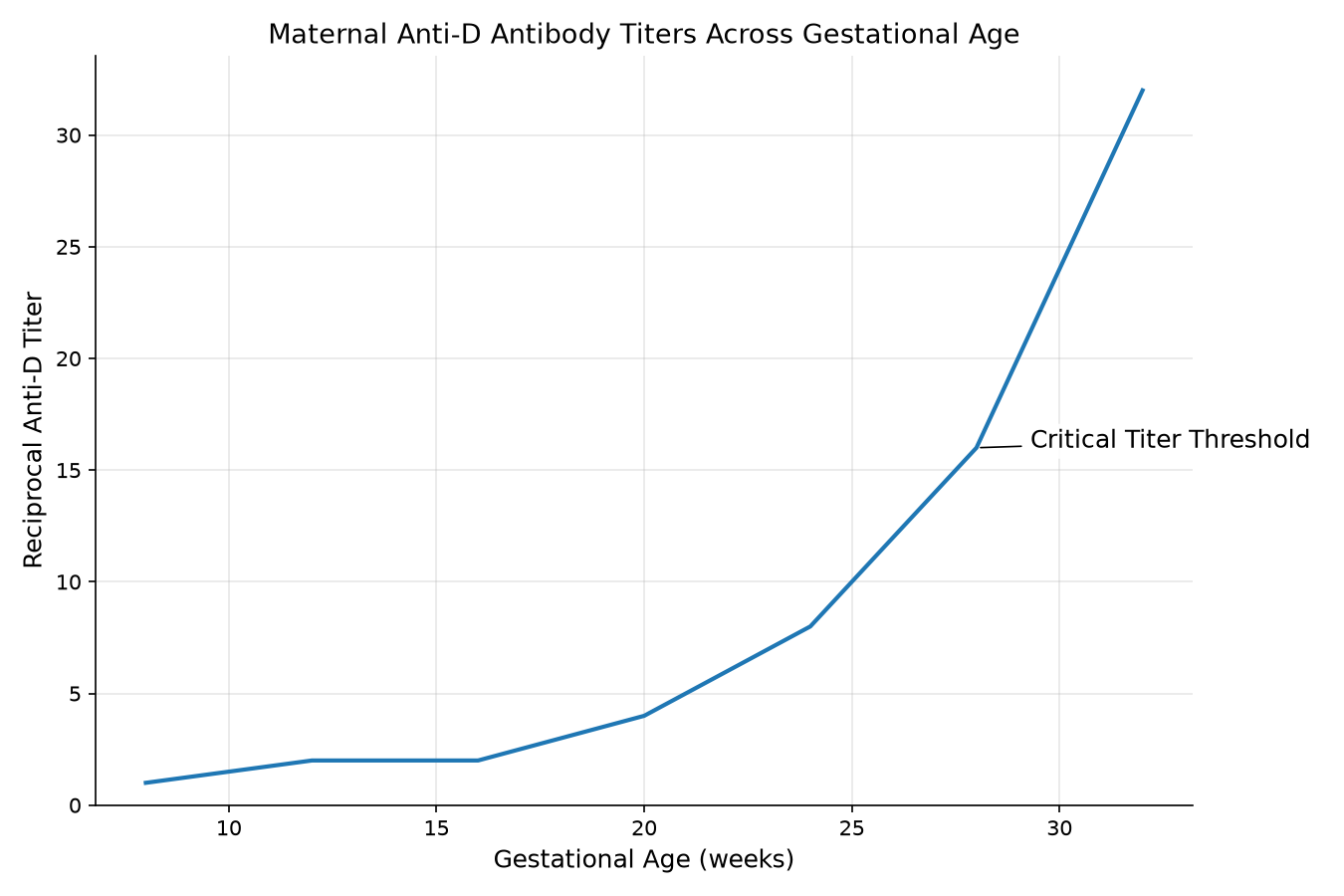
A 31-year-old G2P1 at 19 weeks gestation presents to the obstetric triage unit following a moderate motor vehicle collision where she was the belted driver. She reports lower abdominal soreness from the lap belt. Physical examination reveals mild localized uterine tenderness without palpable contractions. Speculum examination demonstrates a closed cervix without vaginal bleeding or leaking amniotic fluid. Maternal vital signs are stable, and fetal heart tones are 144 bpm with moderate variability.
Her blood type is O-negative, and her initial prenatal antibody screen was negative. Which clinical intervention regarding Rh isoimmunization prevention should the certified nurse-midwife initiate next?
Show answer & explanation
Correct answer: C
Blunt abdominal trauma risks fetomaternal hemorrhage. Unsensitized Rh-negative individuals must receive 300 mcg RhIG within 72 hours, with Kleihauer-Betke testing to assess for larger hemorrhage requiring extra doses.
- Question 3Intermediate
Antepartum · Orders Rh immunoglobulin when indicated during pregnancy.
For an unsensitized Rh(D)-negative individual experiencing a spontaneous first-trimester abortion at 7 weeks gestation, the standard recommended minimum dose of Rh(D) immune globulin to prevent maternal alloimmunization is _____.
Show answer & explanation
Correct answer: B
A 50 mcg microdose of Rh(D) immune globulin protects against up to 2.5 mL of Rh-positive red blood cells, which is adequate for fetomaternal hemorrhage occurring before 12 weeks of gestation.
- Question 4Intermediate
Intrapartum · Implements maneuvers to resolve shoulder dystocia.
During the second stage of labor, a term infant's head delivers over the perineum and immediately retracts tightly against the maternal vulva (the "turtle sign"). Gentle downward traction fails to deliver the anterior shoulder. What is the immediate first-line physical maneuver the certified nurse-midwife should perform?
flowchart TD A[Delivery of Head / Turtle Sign] --> B[Recognize Shoulder Dystocia & Call for Help] B --> C[Avoid Excessive Traction & Avoid Fundal Pressure] C --> D[First-Line: McRoberts Maneuver + Suprapubic Pressure] D --> E{Shoulder Released?} E -->|No| F[Secondary: Posterior Arm Delivery or Internal Rotation] E -->|Yes| G[Complete Delivery]Show answer & explanation
Correct answer: C
McRoberts maneuver with suprapubic pressure is the first-line intervention. It flattens the sacral promontory and widens the pelvic diameter without maternal or fetal trauma. Fundal pressure is strictly contraindicated.
- Question 5Advanced
Intrapartum · Implements maneuvers to resolve shoulder dystocia.
When managing a shoulder dystocia where McRoberts maneuver and suprapubic pressure have failed to achieve delivery, the certified nurse-midwife moves to internal maneuvers. The midwife inserts two fingers into the vagina and places digital pressure on the posterior aspect of the anterior fetal shoulder, pushing it toward the fetal chest to adduct the shoulder girdle. Which rotational maneuver is being executed?
Show answer & explanation
Correct answer: C
Rubin II adducts the fetal shoulder girdle by placing pressure on the posterior aspect of the anterior shoulder, reducing the bisacromial diameter to release the impaction. Fundal pressure exacerbates impaction.
- Question 6Beginner
Intrapartum · Implements maneuvers to resolve shoulder dystocia.
True or False: Application of fundal pressure during an active shoulder dystocia is recommended to assist in dislodging the impacted anterior fetal shoulder.
Show answer & explanation
Correct answer: B
Fundal pressure is contraindicated in shoulder dystocia because it further impacts the anterior shoulder behind the pubic symphysis, drastically increasing the risk of brachial plexus injury and uterine rupture.
Ready for the real thing?
The full CNM simulator has every exam-style question, timed mode, and instant scoring.