
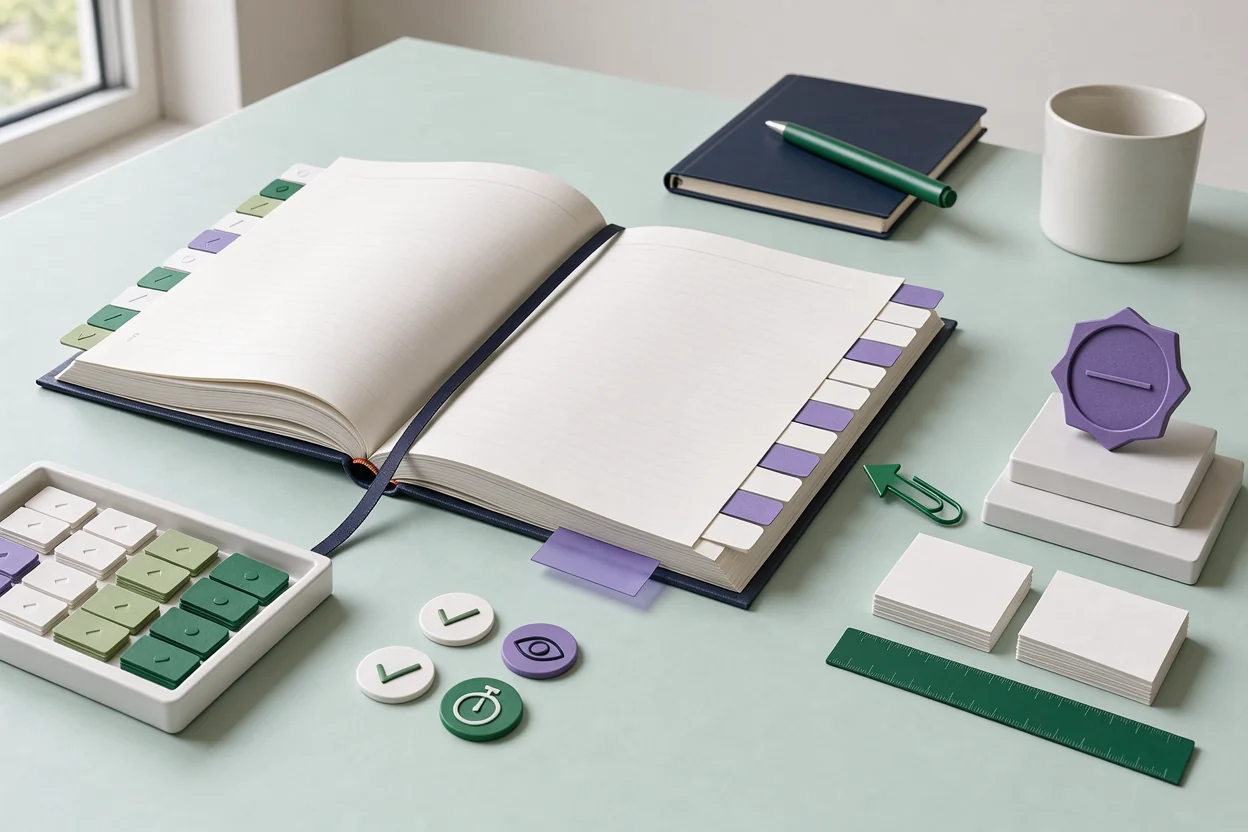
For AAPC CPC exam codebook tabbing guidelines, start by separating two decisions: whether a tab setup is permitted and whether it helps you navigate your books. I can help you compare pre-printed and blank tabs, but I can’t confirm current AAPC approval for either format here. Check the current written instructions for your appointment before buying or attaching either option.
My recommendation is conditional: consider pre-printed tabs when their supplied labels match the destinations you actually use. Consider blank tabs when you have a clear reason to choose different labels or placement. Treat a mixed setup as another possibility only after confirming the relevant requirements.
Then compare the candidates during practice. Judge them by accurate navigation, readable labels, and a layout you can use consistently. Keep permission questions separate from your preference for a particular design.
Separate tab permission from tab preference
For your CPC preparation, settle the permission question before judging convenience. I wouldn’t treat a retailer’s description, another candidate’s setup, or a familiar classroom routine as sufficient confirmation for your appointment.
Ask about the actual setup
When reviewing current instructions, look for language that addresses your proposed materials. Avoid reducing your question to whether “tabs” are allowed if you’re uncertain about the writing, attachment, or extra material involved.
Make your questions specific:
- Does the guidance distinguish between pre-printed and handwritten labels?
- Does it address what may appear on a tab?
- Does it distinguish attached tabs from loose material?
- Does it describe a review of books or other permitted resources?
- Does it identify where to resolve an unclear example?
These are questions to verify, not a statement of AAPC’s current requirements. Leave an unanswered item unresolved until you have an applicable answer.
For a borderline example, describe the exact wording and intended placement. Ask about that example rather than requesting approval for an entire shopping category.
Review annotations separately
Keep a second list for anything written inside your books. Don’t assume an answer about tab labels also settles questions about page annotations, pasted material, or other additions.
For a separate review, consult the article on AAPC codebook notes. Use it to identify questions for your own review, then verify any policy-dependent decision against current AAPC instructions.
Record which document or response you relied on and when you checked it. Revisit the guidance if your appointment details change.
If you’re also preparing for a billing credential, review the CPB permitted codebooks separately. Don’t transfer an assumption between certifications without checking whether it applies.
Compare the labels before choosing a tab set
For the pre-printed versus blank decision, begin with the wording you want to see at the edge of the book. Set color, packaging, and appearance aside until you’ve decided what each proposed tab should help you find.
Pre-printed tabs: choose them when the wording fits
Consider a pre-printed set if you can accept its supplied labels without having to reinterpret them.
Before purchasing, inspect the available label list or product images. Compare the wording against your exact book and intended destinations. If the seller doesn’t provide enough detail, leave compatibility unresolved.
Ask yourself whether you would recognize each label during a lookup. Would you use the printed term naturally? Does it point to a destination you expect to revisit? Would you need to add your own explanation to understand it?
I’d favor this option when the answers are straightforward and the proposed setup meets the applicable requirements. I’d hesitate if choosing the set would mean adopting unfamiliar abbreviations simply because they arrived in the package.
Blank tabs: choose them for a defined reason
Consider blank tabs when you can explain why your chosen wording or placement would suit your workflow.
Write a proposed label list before attaching anything. For each label, name its destination and the reason you want direct access to it. If you can’t identify both, leave that tab out of the first version.
Use wording you can recognize without translating a private abbreviation. Match the terminology in your own book where practical. Before committing to the layout, check whether you can read your proposed handwriting at the size you intend to use.
I’d choose this route for deliberate customization, provided the finished labels comply with the applicable instructions.
A mixed setup: require a reason for every addition
You can also evaluate a proposed combination of pre-printed and handwritten tabs, subject to the same permission checks.
| Proposed approach | Consider it when | Inspect before choosing | Retain it only if |
|---|---|---|---|
| Pre-printed | Supplied labels match your intended destinations | Wording, book match, proposed placement | You recognize the labels during practice |
| Blank | You have a defined labeling plan | Legibility, terminology, proposed content | Your custom labels justify their place |
| Mixed | You can identify a specific gap in the printed set | Repetition, inconsistent labels, crowded placement | Each addition solves an observed problem |
Don’t add a handwritten tab merely to make the setup feel more complete. Give it a specific job.
Make each format earn its place during a lookup
For either CPC tab setup, evaluate the complete movement from choosing a destination to opening the intended page. Don’t decide on appearance alone.
Use a few practice lookups to identify what you would change, then compare one change at a time.
Test recognition before reach
Start with the moment you choose a tab. Without touching the book, decide which label you would use for the lookup in front of you.
If you hesitate, investigate the wording. Would a fuller term help? Are two labels too similar? Have you chosen a label that describes your study topic rather than the destination inside the book?
For pre-printed tabs, decide whether you can work comfortably with the supplied vocabulary. For blank tabs, try writing a clearer alternative on a separate planning sheet before changing the book.
Imagine, for example, two proposed handwritten abbreviations that look almost identical. Treat that as a reason to revise the labels before testing physical placement.
Test placement without adding more labels
Next, evaluate the movement itself. From your normal seated position, try selecting the intended tab and opening the book.
Watch for your own specific difficulties:
- Do you select a neighboring tab?
- Do you need to lift another label to read the one you want?
- Do you repeatedly turn the book to inspect the edge?
- Do you land at the wrong destination despite choosing the intended label?
Adjust placement only after identifying the problem. If the wording caused the hesitation, moving the same label may leave the original issue unresolved.
Keep navigation separate from reasoning
After opening the intended destination, continue through the practice task. Ask yourself why you used that location and what information you needed from it.
If you reached the page promptly but couldn’t explain the answer, record a content-review task. If you understood the reasoning but struggled to find the page, record a navigation task.
Use those categories to choose your next study activity. Revise a label for an observed navigation problem; review the explanation for an unresolved reasoning problem.
Compare lookup time without rewarding a wrong answer
For your pre-printed versus blank comparison, measure the outcome you care about: reaching the intended information accurately. Avoid choosing a setup solely because one practice attempt felt faster.
I wouldn’t attach a seconds-saved promise to either format without supporting evidence. Instead, build a small comparison around your own books, labels, and practice tasks.
Prepare a focused practice set
Choose a manageable set of lookup tasks from your study materials. Include destinations you expect your proposed tabs to serve.
Keep the task wording neutral. Ask yourself to locate information, rather than naming the tab to grab. Write down the intended destination beforehand so you can check where you actually land.
If you use ExamJungle’s CPC practice page, keep your navigation notes separate from your question review. Record which book destination you wanted, which label you chose, and whether that route worked for you.
Use practice material for preparation. Verify exam-resource permission through the applicable exam instructions.
Record hesitation as well as elapsed time
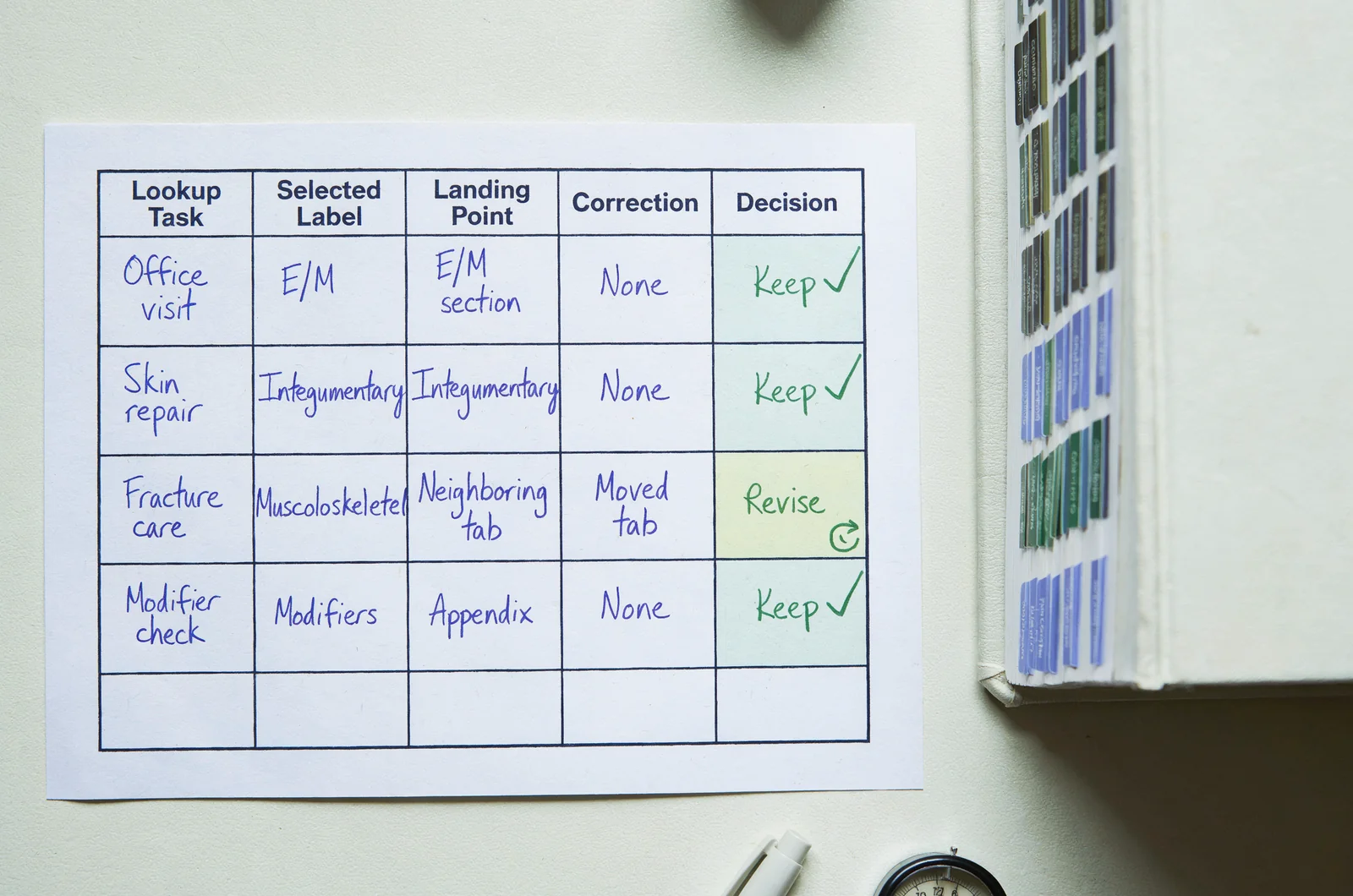
For each attempt, note the starting task, selected label, landing point, and any correction. Add a time measurement if you want one, but keep the destination check beside it.
If you reach the wrong section quickly, mark the attempt as unsuccessful. If you pause to interpret a label, note the wording that caused the pause.
Repeat troublesome tasks after making a defined change. For example, compare the original abbreviation with a revised label. Avoid changing wording, placement, and color together if your purpose is to identify which adjustment helped.
Keep a note of repeated tasks. Before crediting a new layout, consider whether you remembered the destination from the earlier attempt.
Use the result to make a narrow decision
Decide what the comparison actually supports.
Perhaps you prefer the supplied printed label for one destination but want a clearer handwritten label elsewhere. Perhaps neither candidate resolves the difficulty because you’re uncertain which section to consult.
Limit your conclusion to what you observed. Don’t turn one successful lookup into a claim that a whole tab category is faster.
An optional tab-selection worksheet could record the proposed label, destination, policy question, observed difficulty, and practice result. Give it a decision field such as “retain,” “revise,” or “remove.” Keep permission unresolved wherever confirmation is still missing.
Finish the exercise by writing down the specific labels you intend to keep.
Prepare for any codebook review described in your instructions
For exam-day preparation, follow the review process stated in your appointment instructions. I can’t confirm a particular inspection procedure, approval standard, or check-in duration here.
Don’t build your preparation around a prediction that one format will receive less scrutiny than the other.
Resolve uncertain additions before your appointment
Review your proposed setup against the written guidance you found. Separate clear answers from assumptions.
For each uncertain addition, write down what needs clarification. Ask about the actual label or material involved. Keep the question narrow enough that a response can address your example.
If the instructions describe a book review, follow that process. If they identify a contact for resource questions, use that route before your appointment.
Avoid treating a friend’s earlier experience as the answer to your current question. Ask for guidance that applies to your exam and proposed materials.
Inspect the finished layout
Once you’ve resolved the relevant permission questions, inspect the physical setup you plan to use.
Check whether the labels remain readable in their intended positions. Open and close the books during a practice session. Look for tabs that obscure other labels, interfere with handling, or need repair.
Review the written content as a separate task. Include handwriting added after your original setup, rather than checking only the tabs you remember planning.
If you discover an uncertain addition, resolve that item specifically. Don’t assume that replacing it with the other tab format settles the underlying question.
Keep your preparation notes outside the materials you intend to bring unless you have confirmed those notes are permitted.
Leave time for one final rehearsal
After any necessary correction, run another short navigation session.
Use the books and arrangement you intend to take. Include the destinations that previously caused hesitation. Check the amended labels before expanding the practice set.
If you still need to change something, name the problem first. Avoid a broad redesign without an observed reason.
Choose a layout you can keep through your final practice sessions
For the final choice, use your verified requirements and practice observations together. I’d make the decision label by label before deciding whether to describe the whole setup as pre-printed, blank, or mixed.
Favor pre-printed tabs when the supplied structure works for you
Choose the printed approach if its labels fit your book, you recognize them promptly, and your practice record gives you no specific reason to replace them.
You don’t need to invent a customization project. Retain the labels that serve a clear purpose, subject to the applicable requirements.
If the set includes labels you don’t expect to use, decide whether to leave them unattached. Evaluate the arrangement you actually intend to use rather than assuming every supplied tab belongs on the book.
Favor blank tabs when customization has a purpose
Choose blank tabs if you have a defined list of destinations, readable wording, and practice observations that support your chosen layout.
Before adding another label, answer a concrete question: what difficulty is this addition intended to resolve?
Keep a separate study note for topics you need to review. Don’t automatically translate every difficult practice question into another proposed tab.
When you revise a label, retest the task that prompted the change. Keep the revision only if it addresses that difficulty.
Favor a mixed layout when the exception is specific
Consider a mixed arrangement if you prefer an existing printed structure but can identify a particular addition worth evaluating.
Apply the same checks to the addition: permitted content, recognizable wording, useful placement, and a defined destination.
Then set a point at which you stop redesigning. After that, make changes for a confirmed compliance concern or a repeated navigation problem.
Use your remaining practice time to rehearse the arrangement you’ve chosen and review explanations you still can’t give confidently.
Questions to resolve about CPC tabs
For remaining CPC tab questions, separate what you can decide through practice from what requires current AAPC confirmation.
Are pre-printed tabs allowed for the CPC exam?
I can’t verify a current blanket approval for pre-printed tabs here. Check AAPC’s current written instructions for your appointment and ask about your proposed setup if the wording leaves uncertainty.
Don’t substitute a product description for that confirmation. Once permission is settled, evaluate whether the supplied labels suit your books and lookup habits.
Are blank tabs a safer choice for approval?
I wouldn’t treat a blank starting surface as evidence that the finished setup is acceptable.
Describe what you plan to write, where you plan to attach it, and any other material involved. Verify that completed proposal against the applicable instructions.
Choose between formats only after resolving the relevant content and attachment questions.
How many tabs should I use?
I can’t provide a verified AAPC limit here. Check whether the current instructions specify one before choosing a number.
For your own layout planning, begin with a short list of intended destinations. Add a proposed tab when you can explain its purpose, then assess it during practice. Remove or revise labels that repeatedly confuse you.
Should I replace a familiar setup shortly before the exam?
I’d reserve a late change for a specific reason: a confirmed compliance issue, an unreadable label, a damaged tab, or a repeated navigation problem.
If you make a correction, rehearse the amended setup. If your current arrangement meets the applicable requirements and works during practice, keep using it while you review the reasoning behind your answers.
What if I still can’t establish whether a label is acceptable?
Leave the permission question unresolved and seek clarification through the contact route in your current exam instructions.
Describe the exact example. Ask what correction is needed if it is unacceptable. Avoid relying on a general answer about tab categories when your uncertainty concerns particular wording or added material.
Codebook notes and CPC practice