
CEN Sample Questions & Answers
Free Certified Emergency Nurse (CEN) practice questions with worked answers and explanations. See how the ExamJungle simulator prepares you — then jump into the full test.
Launch the full CEN simulator →Showing 6 of 12 free samples.
- Question 1IntermediateSelect 2
Cardiovascular Emergencies · Cardiopulmonary arrest
An emergency nurse is caring for an adult patient in refractory ventricular fibrillation cardiac arrest who has failed two consecutive biphasic defibrillation attempts and high-quality CPR. Which TWO pharmacological interventions are indicated during continued resuscitation? (Select TWO)
Show answer & explanation
Correct answers: B, C
Amiodarone 300 mg bolus is indicated for shock-refractory VF/pVT after the third defibrillation attempt.
Epinephrine 1 mg IV/IO every 3 to 5 minutes is standard during persistent pulseless cardiac arrest.
- Question 2Intermediate
Respiratory Emergencies · Asthma
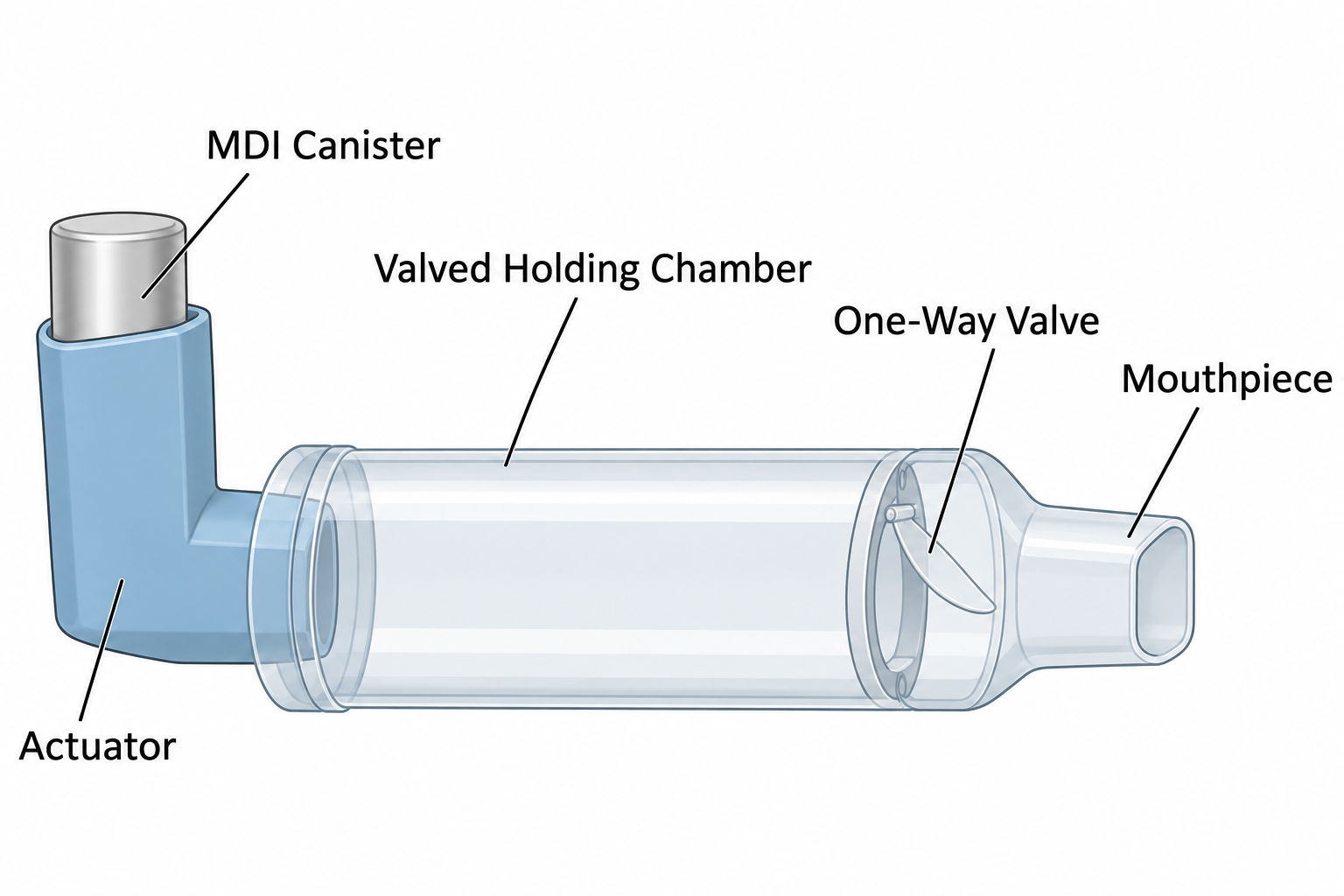
A 24-year-old patient with an acute moderate asthma exacerbation is prescribed inhaled albuterol via pressurized metered-dose inhaler (pMDI) with a valved holding chamber. Based on standard clinical guidelines, what is the recommended administration regimen for albuterol during the initial hour of emergency department treatment?
Show answer & explanation
Correct answer: C
Guidelines recommend 4 to 10 puffs of albuterol via pMDI with spacer every 20 minutes for the first hour of acute exacerbation therapy.
- Question 3Intermediate
Respiratory Emergencies · Asthma
A 32-year-old patient with severe acute asthma remains dyspneic with widespread expiratory wheezing, tachypnea, and an FEV1 of 40% predicted after completing three consecutive nebulized bronchodilator treatments and receiving oral systemic corticosteroids. Which intravenous medication is indicated as a second-line bronchodilator to reduce hospital admission risk?
Show answer & explanation
Correct answer: A
IV magnesium sulfate is indicated as a second-line bronchodilator for severe acute asthma exacerbations unresponsive to initial inhaled SABA and corticosteroids.
- Question 4Advanced
Respiratory Emergencies · Asthma
A 19-year-old college student with a history of persistent asthma presents to the emergency department via EMS. The patient developed acute shortness of breath that progressively worsened over the preceding 6 hours despite using a rescue inhaler at home.
On arrival, the patient is sitting in a tripod position, diaphoresis is noted, and speech is limited to single words. Initial vital signs demonstrate heart rate 134 beats/min, blood pressure 142/90 mm Hg, respiratory rate 36 breaths/min, and oxygen saturation 89% on ambient air. Auscultation reveals loud, high-pitched expiratory wheezing throughout all lung fields.
Twenty minutes into continuous nebulizer therapy, the nurse notes the patient has become somnolent and confused. The respiratory rate has decreased to 10 breaths/min, speech is absent, and auscultation reveals virtually inaudible breath sounds bilaterally. What clinical development does the appearance of a 'silent chest' and somnolence signify?
Show answer & explanation
Correct answer: D
A silent chest accompanied by somnolence and bradypnea indicates severe airflow obstruction and respiratory muscle fatigue, heralding respiratory arrest.
- Question 5Intermediate
Neurological Emergencies · Stroke
A 62-year-old patient arrives at the emergency department with acute right-sided hemiplegia and expressive aphasia with a symptom onset time 2 hours ago. A non-contrast head CT rules out intracranial hemorrhage. Initial blood pressure is 196/114 mm Hg. What must the emergency team accomplish regarding blood pressure management before initiating intravenous thrombolytic therapy?
Show answer & explanation
Correct answer: C
Blood pressure must be lowered below 185/110 mm Hg before administering IV thrombolytics to reduce the risk of secondary intracerebral hemorrhage.
flowchart LR BP[BP >= 185/110] --> Antihypertensive[IV Labetalol / Nicardipine] Antihypertensive --> Recheck{BP < 185/110?} Recheck -->|Yes| IVT[Initiate Thrombolysis] Recheck -->|No| Hold[Withhold Thrombolysis] - Question 6Advanced
Neurological Emergencies · Stroke
Following successful endovascular mechanical thrombectomy with complete recanalization (mTICI grade 3) for acute ischemic stroke, which post-procedure systolic blood pressure target is recommended during the first 72 hours, and what blood pressure management practice is classified as harmful?
Show answer & explanation
Correct answer: D
Post-recanalization guidelines target systolic BP between 140-180 mm Hg; aggressive reduction to <140 mm Hg compromises cerebral perfusion and is harmful.
Ready for the real thing?
The full CEN simulator has every exam-style question, timed mode, and instant scoring.