
CPEN Sample Questions & Answers
Free Certified Pediatric Emergency Nurse (CPEN) practice questions with worked answers and explanations. See how the ExamJungle simulator prepares you — then jump into the full test.
Launch the full CPEN simulator →Showing 6 of 12 free samples.
- Question 1Beginner
Triage Process · Mass casualty
True or False: According to emergency preparedness benchmarks for pediatric facilities, active participation in disaster management is best demonstrated when healthcare systems conduct a dedicated pediatric mass casualty incident exercise at least once every two years.
Show answer & explanation
Correct answer: B
True. Conducting a dedicated pediatric mass casualty incident exercise at least every two years is a recognized standard to ensure clinical preparedness and staff readiness for surge events.
- Question 2Intermediate
Triage Process · Decontamination
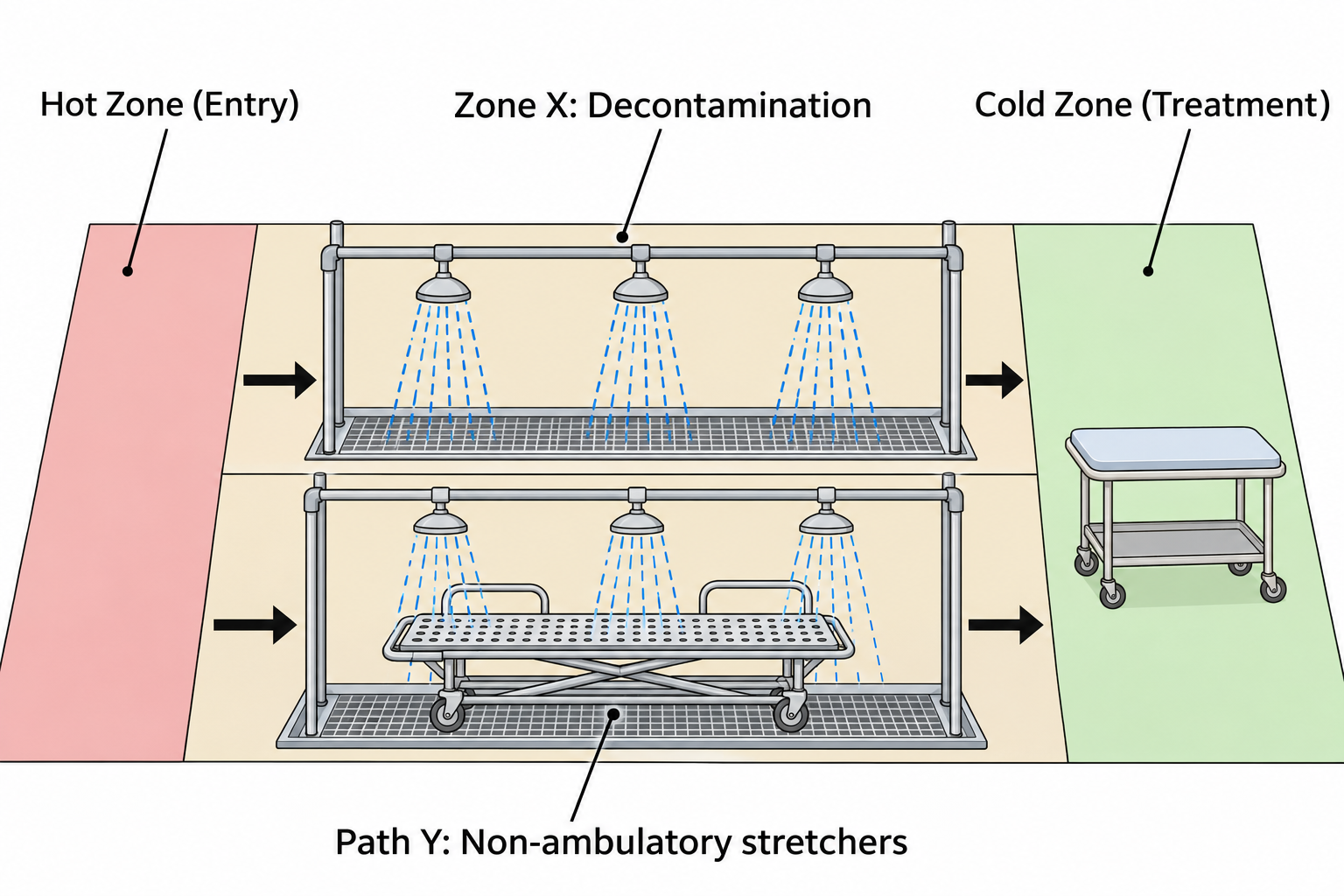
Multiple pediatric casualties arrive at the emergency department following an industrial toxic organophosphate spill. When staging the emergency decontamination corridor shown in the figure, which protocol modification is essential for pediatric casualties compared to adult protocols?
Show answer & explanation
Correct answer: D
Children have a high body surface area-to-mass ratio and thin skin, making them prone to rapid hypothermia. Using warmed water during decontamination prevents hypothermic crisis and preserves stability.
- Question 3Advanced
Assessment · Primary and secondary survey
A 4-year-old child with severe blunt polysystemic trauma is intubated, ventilated, and undergoing primary survey in the trauma resuscitation bay. Five minutes after arrival, the pulse oximeter suddenly alarms with an SpO2 dropping from 99% to 74%, while the blood pressure rapidly falls from 92/58 mm Hg to 54/30 mm Hg. Heart rate drops from 120 to 62 beats/min.
Which action must the emergency nurse prioritize first?
Show answer & explanation
Correct answer: A
In an intubated trauma patient with sudden acute desaturation and cardiovascular collapse, assessing the airway and breathing (DOPE mnemonic) takes immediate priority over initiating fluid resuscitation.
- Question 4Intermediate
Assessment · Primary and secondary survey
A 6-year-old child requiring emergent rapid sequence intubation is placed on mechanical ventilation. To continuously verify and monitor endotracheal tube position and prevent unrecognized accidental extubation during patient transfers, which modality is the gold standard recommended by pediatric resuscitation guidelines?
Show answer & explanation
Correct answer: C
Continuous waveform capnography provides instantaneous, highly reliable detection of tracheal tube placement and immediate notification of accidental tube displacement or extubation.
- Question 5Beginner
Assessment · Developmentally appropriate pain assessment and reassessment
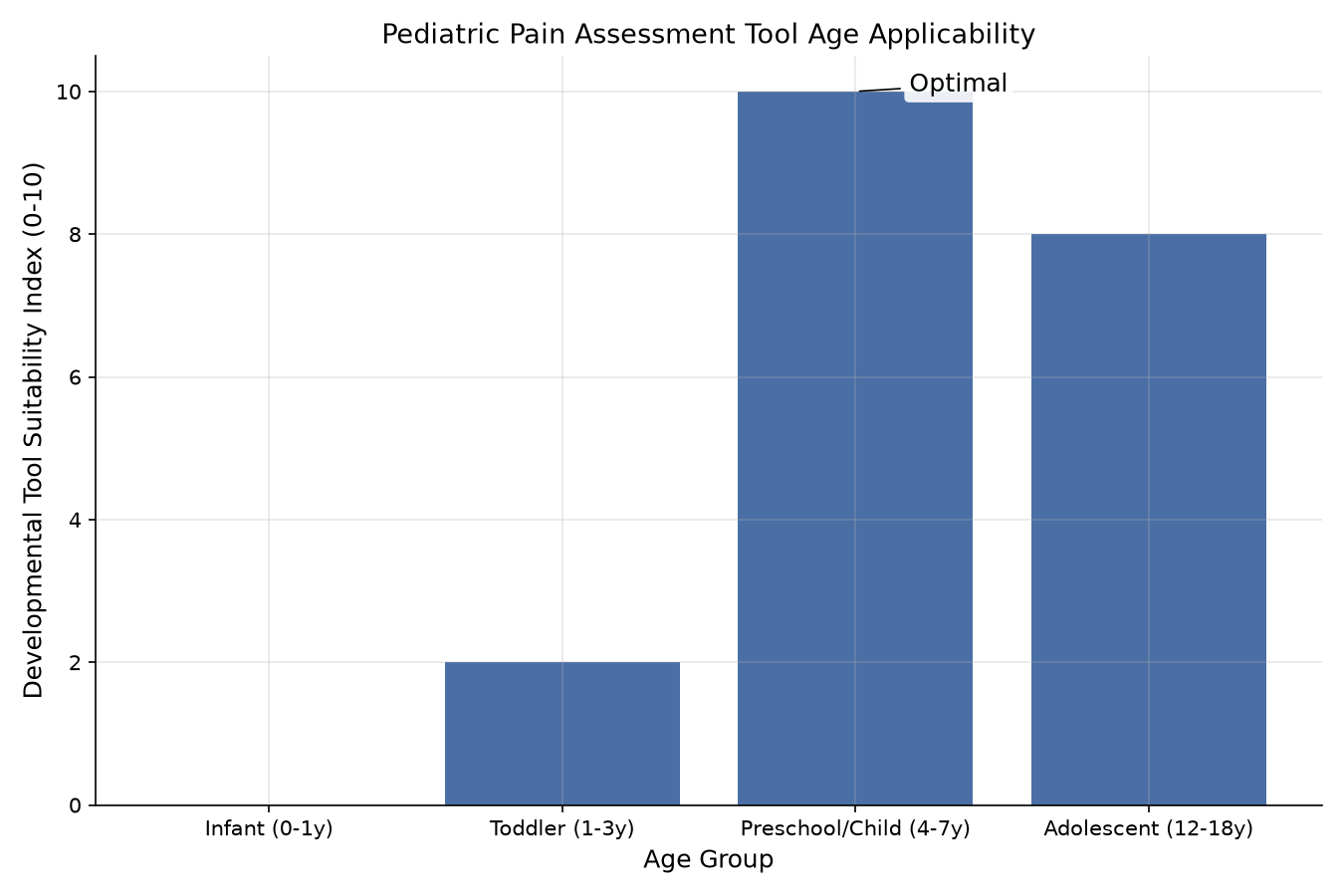
A 5-year-old alert, verbal child arrives at the emergency department with an isolated forearm fracture. The nurse intends to assess the child's pain intensity using a validated self-report tool. Which pain scale is most developmentally appropriate for this child?
Show answer & explanation
Correct answer: C
For verbal children aged 4 to 7 years, the FACES scale is the most developmentally appropriate validated self-report tool. FLACC is observational for non-verbal/infants; numeric scales require abstract concept of numbers.
- Question 6Advanced
Assessment · Non-pharmacological and pharmacological interventions
An 8-year-old child with known congenital heart disease and secondary reactive pulmonary hypertension presents with a painful lower extremity laceration. Why is prompt, aggressive pain management clinically critical in this specific patient beyond providing emotional comfort?
Show answer & explanation
Correct answer: C
In pulmonary hypertension, pain induces intense endogenous catecholamine release, raising pulmonary vascular resistance. This can trigger a lethal pulmonary hypertensive crisis and acute right ventricular failure.
Ready for the real thing?
The full CPEN simulator has every exam-style question, timed mode, and instant scoring.